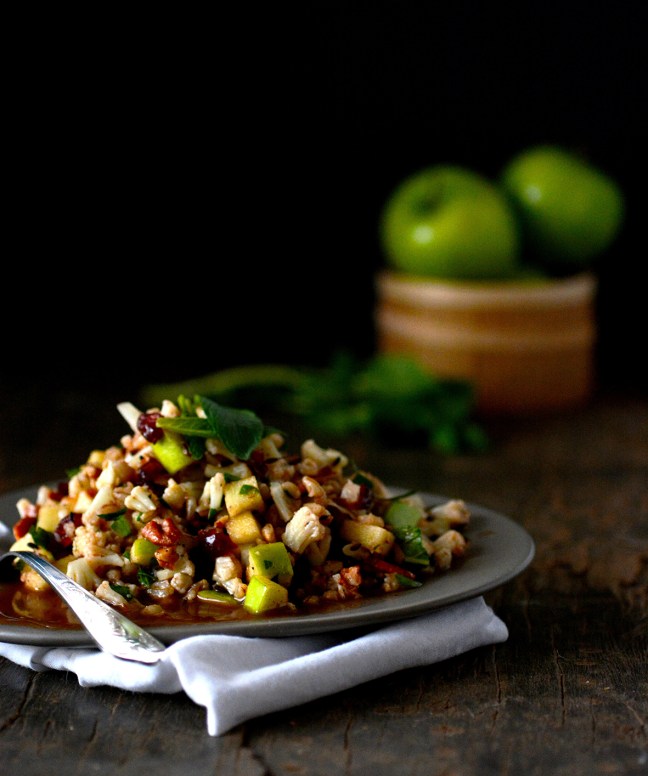
Cauliflower and Apple Salad with Tamarind Dressing

When I was asked by the Australian Jewish Newspaper to contribute a recipe appropriate for the upcoming Jewish festival Rosh Hashanah, I got to thinking about food with respect to religion.  Food is so complexly linked to our culture which in turn influences the way we choose to celebrate important religious festivals.

From the universally known bread and wine of Christianity to the more complex dishes I was raised with that are linked to the multitude of Hindu festivals, I am fascinated by the basis for why certain foods are considered auspicious.
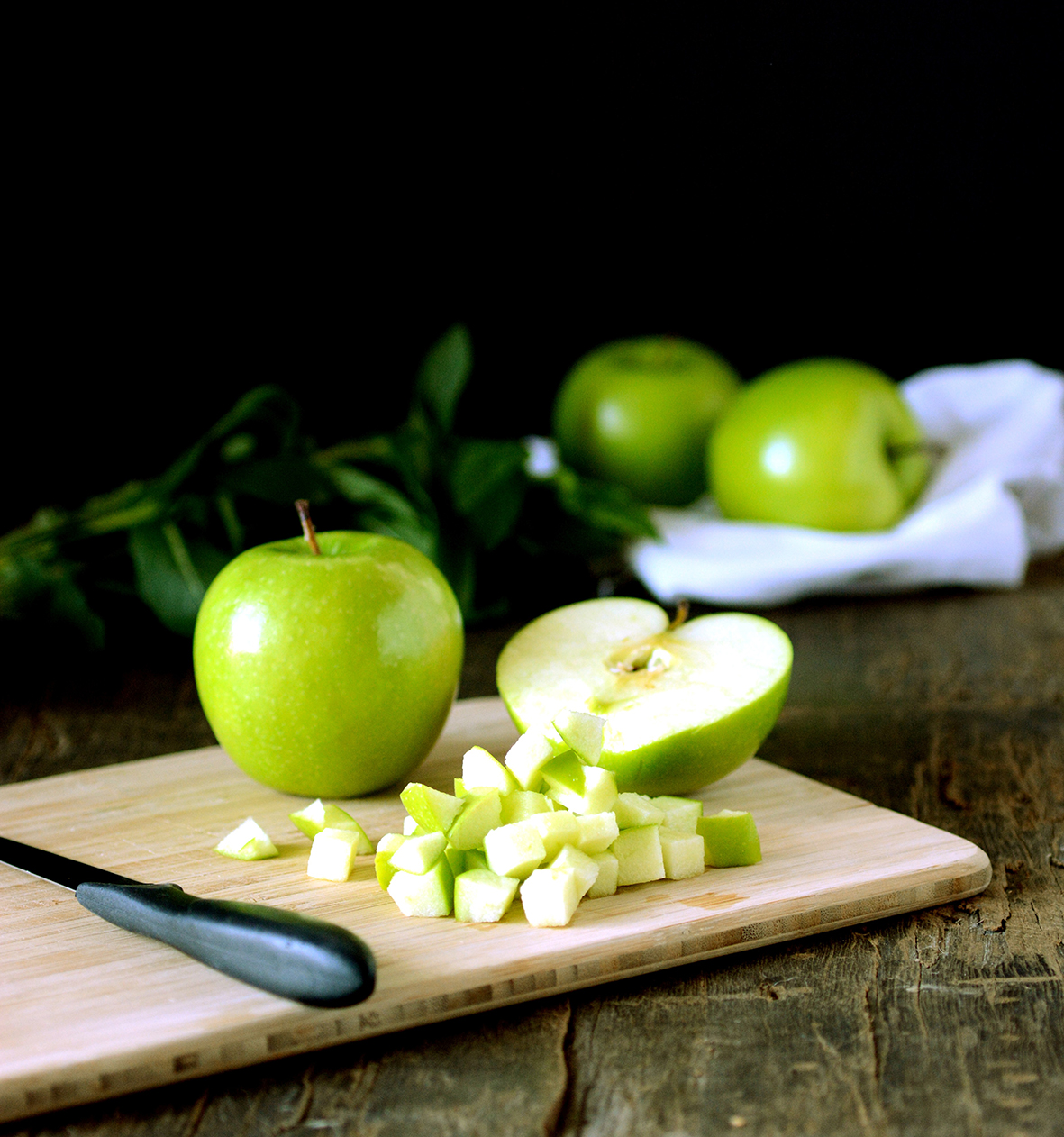
Green apples 2

This is a month that is heavily concentrated with important Hindu festivals.  Krishna Janmasthami, or Gokulashtami is next.  Traditionally, many sweet and savoury snacks are prepared as an offering to the cheeky Lord Krishna, known for his mischievous thieving of home-churned butter as a child.  It is easy to see why this festival was a childhood favourite of mine, and it wasn’t just because I was always quite fond of Lord Krishna.

Barely have our waistlines recovered from the excessive consumption during Gokulashtami before Ganesh Chathurthi arrives, a celebration of the elephant headed God.  Little steamed or deep fried pastry parcels with a coconut and jaggery filling are a traditional staple.  There are many stories associated with the auspiciousness of this dish, variations of which are called the modakam or kadabu.  The simplest explanation is that the sweets were a favourite of Lord Ganesha and he is often depicted with a plate of the delicacies at his feet.

cauliflower

What especially strikes a chord with me is the significance of bevu bella, a mixture of bitter neem leaves and caramel-sweet jaggery.  A spoonful of bittersweet that is distributed during Ugadi, the Kannada New year.  It is a reminder that life brings with it both happiness and sorrow and one must begin each year prepared to handle both with equal grace.
Green Apples1

Rosh Hashanah falls in September and is the Jewish New year.  It is believed to be the anniversary of the creation of Adam and Eve, and a ‘day of judgement’ for those that follow Judaism.  Foods such as apples, honey and dates are offered and eaten to symbolise a sweet new year.  Pomegranates are another auspicious food with their many seeds representing a fruitful year ahead.

cauliflower apple salad 1

I put together a salad that was inspired by one I had at a trendy Sydney cafe, Kepos Street Kitchen.  There, hubs and I hipster-watched as we devoured a large bowl of an incredible cauliflower and pomegranate salad.  I couldn’t source any pomegranate for this recipe so I’ve used apple but pomegranate would also work well.

This is a salad that combines the bite of cauliflower with the tartness of green apples and cranberries.   The dressing is tamarind based, sweetened with honey and perfectly balanced with the warmth of cumin and paprika.  It is a dressing that will collect at the bottom of the bowl but this is far from a problem because you will find yourself sipping spoonfuls of it long after the solid ingredients are gone.  Crunchy toasted pecans, tossed in right before serving lend a final textural surprise.
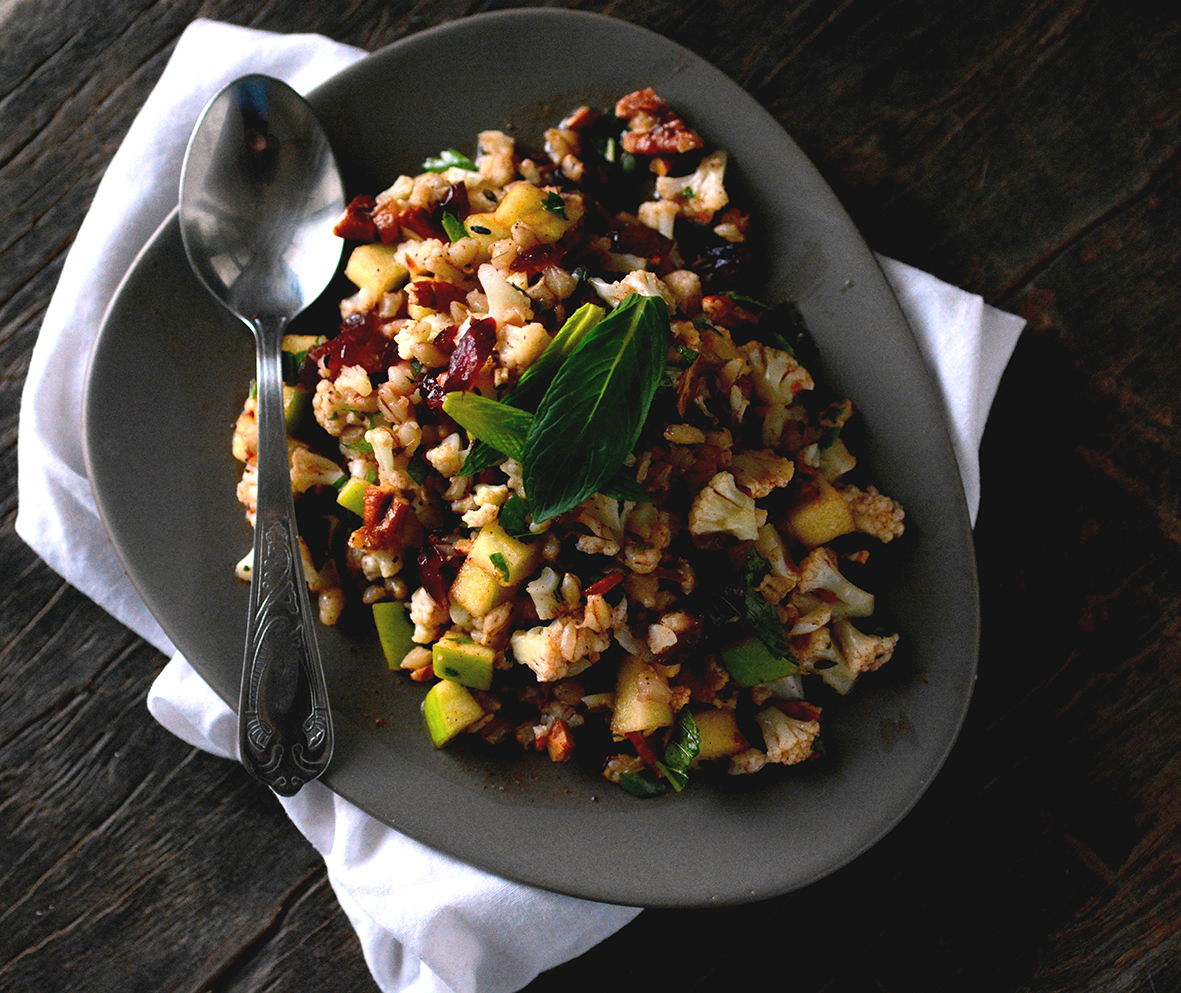
cauliflower apple salad 2

Cauliflower and Apple Salad

Serves 2-3 as a side dish

Get:

For the dressing:

Small ball of dried tamarind (ping-pong ball sized)
1/2 cup boiling water
1  1/2 tsp cumin seeds
1/2 tsp paprika
1/4 tsp salt
1 tsp honey
1/2 tsp lemon juice
1/2 tsp olive oil

For the salad:

1/4 cup pearl barley
1/4 tsp salt
1 1/2 cups boiling water
1/2 cup pecans
1  1/2 cups cauliflower in tiny florets
1/2 a green apple diced or 1/3 cup pomegranate seeds
1/2 cup dried cranberries, roughly chopped
1 tbsp mint leaves, finely chopped
2 tbsp parsley (flat or curly), finely chopped

Make

Preheat the oven to 160 C.  When heated, place the pecans in the oven on a tray for 8-10 mins or until toasted.  Allow to cool and chop roughly.  You will not be needing the oven after this.

Soak the tamarind in 1/2 cup boiling water for about 10 minutes.  Mash the tamarind in the water with a fork and drain, reserving the water.  You can discard the tamarind pulp.

Place the pearl barley, 1 1/2 cups boiling water and 1/4 tsp salt in a saucepan or pot.  Bring to the boil and simmer for 30-40mins until the barley is cooked but still a little chewy.  Drain and set aside.

In a small non-stick pan, toast the cumin until a little browned and fragrant.  You could probably also do this in the oven.  Using a mortar and pestle or spice grinder, grind 1/2 tsp of the toasted cumin to a powder.

Chop the stems off the cauliflower just at the base of the florets and divide into tiny florets.  Wash well.  Blanch in boiling water (enough to completely cover the cauliflower) for 5 minutes.  Drain and set aside.

Dice 1/2 a green apple into roughly 8-10 mm pieces.

To make the dressing, combine tamarind water and the rest of the dressing ingredients except for the whole cumin seeds in a large bowl.  Whisk to combine well.  Taste and add more salt or lemon juice if desired.

To the bowl add cauliflower, apple, barley, whole toasted cumin and herbs.  Toss well to coat in the dressing.  Just before serving, toss through the pecans.

Notes:

Dried tamarind is available at all Indian grocers.  You could also use tamarind paste- dissolve about 1/2 tsp in 1/2 cup boiling water.

Pomegranate seeds would also work really well in this salad either instead of or in addition to the apple.

Walnuts would also work well instead of pecans.

Want more salad? Try:

Quinoa Salad
Zucchini, Carrot and Fennel Salad
Warm Lentil Salad with Goats Cheese and Walnuts

cauliflower apple salad 3

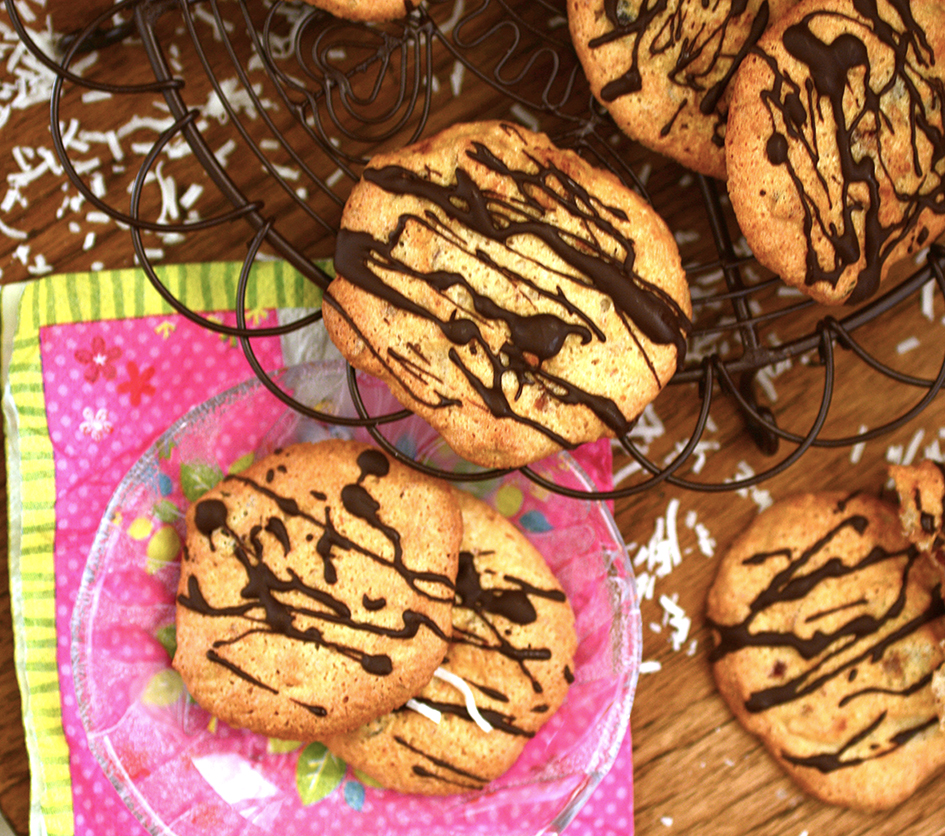
Chocolate-Drizzled Macaroon Cookies for August SABH

I spend a lot of time in my own little world. Call it a Piscean trait or an only child thing that la-la land seems to be a second home for me.

It’s nice up there you know, and for the most part I have no complaints.  But being somewhat of a space cadet leads to some muddled and sometimes embarrassing effects.

Macaroon Cookies 4

There was that time during my primary school days in Mumbai.  It was a Tuesday and I somehow had it in my seven year old mind that it was a Wednesday, a day when school finished at noon.  So little me waited at the school gates for my mum, slightly puzzled as to why I wasn’t surrounded by the usual crowd of kids waiting and parents collecting.
To add insult to injury, despite normally being a perfectly angelic student, I was reprimanded for my confusion and wound up utterly humiliated!

Macaroon Cookies 1

Last week, the days of the calendar jumped around without any warning again.  I got my Mondays mixed up and posted this Indian spiced cookie recipe for Sweet Adventures Blog Hop, hosted by The Sticky and Sweet.  Seconds after I hit publish, I realised that SABH week was actually this week!

My embarrassment was significantly soothed with the realisation that two batches of cookies can only be better than one.  So I set about to put together another batch.

Macaroon Cookies 3

This is a macaroon like cookie- not the fancy schmancy high maintenance French macarons that are currently on a mission for world dominance.  No, this is like the much simpler coconut macaroon but with other good things added in.

Think of the egg whites as merely a vehicle for all the awesome nuttiness.   You can totally personalise these.  Add almost whatever you want- other nuts, dried fruit or chocolate chips.  The original recipe which is the inspiration for this uses chunks of marzipan.  If you want this to be totally fructose-free, leave out the cranberries and use unsweetened or fructose-free chocolate.

Chocolate-drizzled Macaroon Cookies

Inspired by these cookies from The Tiffin Box

Makes 20-25

Get:

4 egg whites
1/2 cup rice syrup and honey
1/2 cup almonds
3/4 cup almond meal
1/2 cup shredded coconut
1/2 cup cranberries
10-12 squares dark chocolate

Make:

Preheat the oven to 150 C.

Roast the almonds on a baking tray for about 15 mins.  Allow to cool and chop roughly.

Whip the egg whites to soft peaks.  Fold in the syrup gently.  Sift in the almond meal.  Add the coconut, almonds and cranberries and fold all the ingredients together gently, being careful to preserve as much of the lightness as possible.

Line 2 or 3 baking trays with baking paper and grease the paper for insurance purposes.  Place tablespoon sized dollops of the batter on the paper with about 2 cm between dollops.

Bake for about 20 minutes or until the cookies have browned a little.  Allow to cool.

Melt the chocolate in a Bain Marie or double boiler, or in the microwave in 20-30 second bursts.  Using a fork, drizzle the cookies with chocolate.

Macaroon Cookies 2

Sour Cream Chicken Curry

Continue reading Sour Cream Chicken Curry

Speaking of lemons….

…..there are still a few kicking around in my fridge.  They are a little softer than they were a week ago and I finally made myself throw out their leaves and thorns.

The thorns just amp up the coolness factor of all this.  Don’t think you can just reach in and grab the luminous fruit whenever it pleases you.  As lovely as they look, the tree doesn’t give them up without a fight and you are likely to get jabbed in the finger by that crafty defence mechanism.

You won’t see it coming of course, not with your eyes fixated on those shiny skinned lemons.  They will be yours eventually but don’t expect the tree to give in without a fight.

Nankhatai 2

I squeezed and zested as many as I could and although I can use the juice gradually, I was aware that I needed to use the zest pretty quickly.  Lemon zest, by the way, is my current favourite ingredient.  There is only so much lemon curd one needs to have in the fridge so that wasn’t an option.

Nankhatai 1

With perfect timing, the August Sweet Adventures Blog Hop was announced, hosted by Sophie from The Sticky and Sweet.  Cookies are the name of the game this month and I decided to try and make a biscuit that has been on my mind lately.

(Let’s just pretend for now that it’s perfectly normal to have baked goods on one’s mind.)

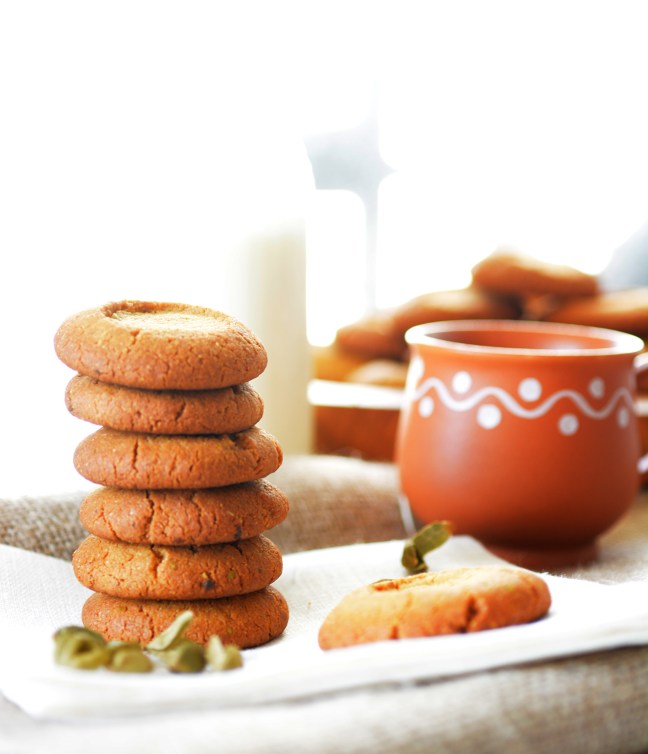
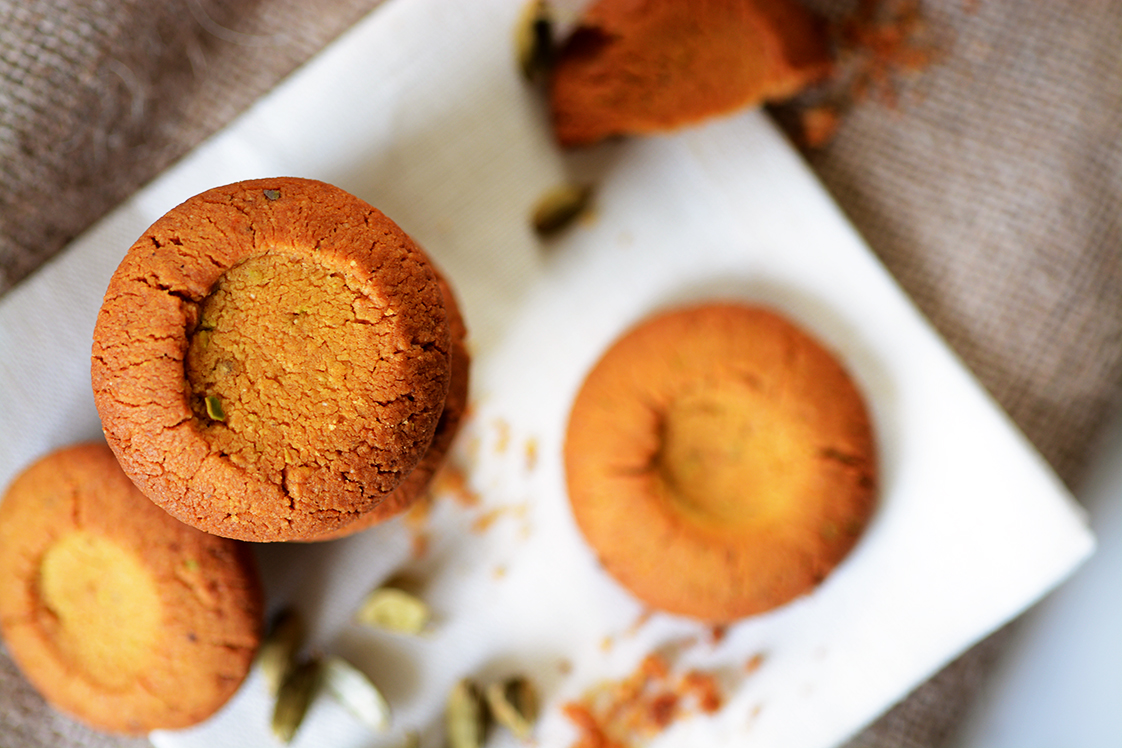
The biscuit in question is nankhatai, a traditional Indian cookie that is almost shortbread like in texture.  The chickpea flour gives it it’s richness and mouth-coating quality.  Semolina provides little spots of crunch and substance in an otherwise buttery crumbly world.  That lemon zest found it’s calling in my version and joined pistachio and cardamom to flavour what turned out to be a gorgeous tea-time biscuit.

I just love it when a plan comes together.

Nankhatai 4

Lemon and Pistachio Nankhatai

Modified from this recipe

Makes 28-30

Get:

180g butter at room temperature
3/4 cup brown sugar
Zest of 1 1/2 lemons, finely grated
Insides of 8-10 cardamom pods
1 tsp white sugar
1 1/4 cups besan (chickpea) flour
1/2 cup plain flour
1/4 cup coarse semolina
1/2 tsp baking powder
1/4 tsp salt
1/4 cup pistachio kernels

Make:

Preheat the oven to 175 C.

Using a mortar and pestle or spice grinder, powder the cardamom and white sugar together.

In a large bowl, cream the butter and lemon zest with the sugar and the cardamom/sugar powder.

In a separate bowl, sift all the flours, baking powder and salt together.  Grind the pistachios very coarsely so that there are still lots of small pieces rather than a powder.  Add this to the flours and stir through.

Add the flour mixture to the butter and sugar mixture and combine with a spatula.  You will then have to get your (clean) hands in there to form a dough. Knead the dough for a couple of minutes until it is smooth.  If it is too sticky, put it in the fridge for about 10 mins. Knead again for a minute.

Form tablespoon sized balls.  Roll between your palms and flatten a little.  Mine were 3-4 cm in diameter and about 1.5 cm thick.  Press down in the middle with your thumb to make an indentation.  Lay the cookies out on baking trays lined with baking paper.  Leave 2-3 cm between cookies as they will spread.

Bake on the middle shelf of the oven for 16-20 mins.  The cookies are done when they have spread a little and are browned at the top and bottom.  They will be soft initially but will crisp up after they cool.

Nankhatai 3

OSP @ ATFT Food Photography Workshop, Sydney

ATFT Class 1

Since I took the plunge into the world of blogging, I have been especially delighted by the supportive nature of the food blogging community both in Sydney and around the world.

ATFT Class 2     ATFT Class 7

When I found myself sitting at a table with several other food bloggers at the A Table for Two food photography workshop last weekend, I felt at once totally comfortable and incredibly inspired.

The ATFT blog and workshops are the brainchild of Billy Law, a previous Masterchef Australia contestant, food photographer, cookbook author and self-confessed sweet-tooth.

ATFT Tomatoes

Over two days, Billy talked us through the technical aspects of food photography and what to do with that big hunk of metal and plastic that goes click when you press the button.

Then there was the personal advice and clever tricks he generously shared about the art of food styling.  Billy’s bubbly personality put us all at ease, regardless of how silly our questions were.

There were a few Ah-ha! moments for me and a few things in my brain went ‘click’ as my camera did the same.

ATFT Class 9     ATFT Class 6

The good people of Mumu Grill kept us all well fed with a delectable and nicely staggered four course meal that helped fuel our bodies while all the new ideas fuelled our minds.

Somehow sipping a glass of wine at 11 am seemed perfectly acceptable when it was all part of the quest for knowledge and self-improvement.

ATFT Class 3    ATFT Class 4

As a newborn in this world of food blogging, this workshop was exactly what I needed and I hope to put all the little tips I picked up into action very soon.

ATFT Class 11

Fructose-free Lemon Curd from a Lemony Bounty

I’ve set about the task of growing herbs in my balcony with a stubborn determination which is not entirely typical of me.  Mind you, gardening for me is an undertaking that requires nothing short of the stubbornest of determinations because despite my best efforts, I seem to fail miserably at growing anything.

Anything apart from mould in bowls of questionable things in my fridge, that is.

lemons 1

Of course like all other products of my generation, I blame my mother entirely for this particular deficiency.  She once told me that when she was a child, she planted some seedlings and rushed out excitedly the next day to pull them out of the soil to check if the roots were growing.

Needless to say there was not much of anything growing after that.

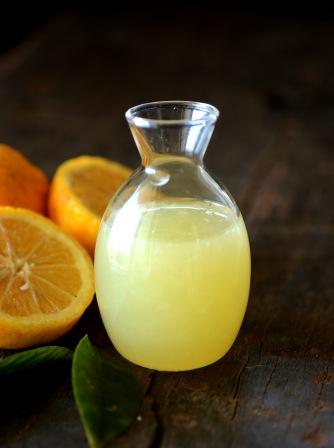
Lemon Juice

As luck would have it, Dad is actually quite a competent gardener and I can almost forgive him for not passing on the gene as he keeps me adequately supplied with whatever is flourishing in their garden.

So while the basil languishes in our balcony and the dill shrivels pathetically next to it, my parents’ garden has a curry leaf tree that has reached alarming heights, chilli plants that frequently sprout their spicy red fruit and a lemon tree that produces impressive numbers of citrusy goodness every winter.

When my parents handed over a bag of the aforementioned lemons, it was immediately clear to me that I would not be able to use all of the fruit before they dried up to half of their juicy selves.

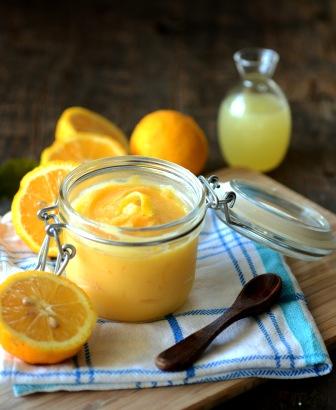
Lemon Curd 2

Following this was the thought that this would be the perfect opportunity to try my hand at making lemon curd.  That’s right, for the first time!  Surprising as I have always found the sweet, creamy tang of lemon curd at once delightful and refreshing.

I then decided that one first wasn’t enough for the day and decided to make a fructose-free version of said lemon curd.

This version uses dextrose, which is a glucose powder.  It is slightly less sweet than regular lemon curd but I found it sweet enough.  You could probably add a little more dextrose if you wanted to.  You can use lemon curd for lots of things- tarts, lemon meringue pie, cake.  Or just spread it on toast.  I am planning more lemon curd related posts in the future so stay with me fellow citrus-lovers.

So what are your favourite ways to use lemon or other fruit curds? I would love to hear your ideas in the comments section.

Lemon Curd 1

Fructose-free Lemon Curd

Makes just under a cup

Modified from Gifts from the Kitchen by Annie Riggs via The Patterned Plate

Get:

2 eggs

Juice and finely grated zest of 1 1/2 lemons

62g butter, cubed

110g dextrose

Make:

Beat the eggs and place in the heatproof top bowl of a double boiler or Bain Marie.  I used a large thick walled ceramic bowl.  Ensure the water in the lower vessel is not touching the bowl at the top.  Add the other ingredients and cook on moderate heat for 17-20mins, stirring every few mins.

Stop cooking when the mixture is the consistency of a thick custard.

Allow to cool for a few mins, then place in the fridge to speed up the cooling process.

Place into a sterilised jar and in the fridge.  Mine lasted a few days in the fridge.

Notes:

To sterilise glass jars, wash with soap and hot water and place the jars and lids upturned on a baking tray in a preheated oven at 160 C for 20 mins.

If  fructose-free is not your thing, replace the dextrose with the same amount of caster sugar.

Lemon Curd 3

Click the Month: July 2013

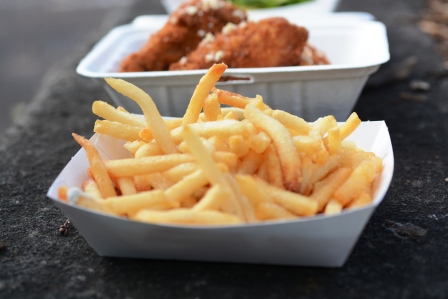
July has been all about clear blue skies and a sparkly sun while the chill remained in the Sydney air. We made sure to get out and about and soak in some Vitamin D, There has been a food truck epidemic in Sydney and we joined in, partaking in the offerings of the Masterchef food truck.

VKD_1001

VKD_0977

VKD_1006

VKD_1005

We made our way to the Aroma Coffee Festival in Sydney Harbour. There we lunched while perched on a retaining wall looking out over a view of the Opera House.

20130721_141158

20130721_140814

20130721_134102

To make up for all the delicious fatty excess, I dabbled in kale by combining it with flaked coconut and a tahini based dressing, and toasting the whole thing in the oven. Topped with a poached egg it made a healthful lunch with a good hit of protein and fibre.  There was this healthy beetroot rice and my Dad’s pav bhaji. I explored sweet low-fructose possibilities with these full-of-goodness bonbons and coconut cake bars.  There are other fructose-free food projects in the works so watch this space.

How was your July? What were your memorable moments?

VKD_1059

A Bowl of Red

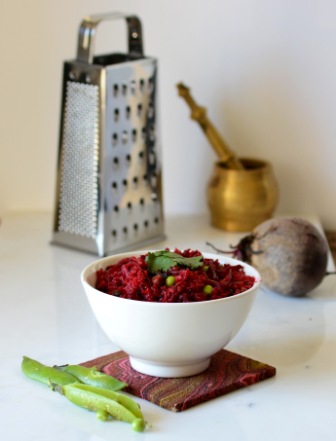
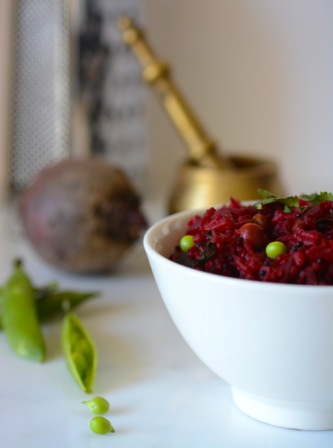
Beetroot Fried Rice 2

Beetroot does this thing where it colours everything around it crimson with its juices.

My fingers, the wooden spoon, the new(ish) tea towels……et al.

I can’t decide whether it’s very cool or very obnoxious.

Beetroot and peas

And rice…..well rice doesn’t stand a chance against beet juice, what with being white and all.

It’s a blank canvas for redness.

This is a super simple, quick weekday meal.  My solution to having nothing in the vegetable crisper drawer except a single lone beet, and a container of cooked rice that needed a good home.

Peas

I think we’ll keep this one on the dinner rotation.  The beets provide fibre and a touch of sweetness which is nicely contrasted by the chilli.  The rice makes it a filling weekday meal which is super quick to make.  Did I say that already?  Well it is……it took me longer to take photos of this dish than it did to make it.

Super quick.

Beetroot Fried Rice 3

Beetroot Fried rice

Feeds 2-3

Get:

500g beetroot, peeled and julienned
1/2 cup fresh or frozen peas
2 tsp vegetable oil
1 tsp black mustard seeds
1/4 tsp turmeric
1/2- 1 tsp chilli powder
1/8 tsp asafoetida
1/2 tsp urad dhal (uncooked)
1/2 tsp channa dhal (uncooked)
8-10 curry leaves
1-2 large hot fresh red chillies, finely chopped
Salt
3 cups cooked rice (I use basmati)
1 tsp lemon juice

Make:

If you do not have rice which is already cooked, cook the rice using your favourite method.  Spread the cooked rice out on a large tray to cool.

Peel the beetroot and julienne- I use a mandolin for this.

If using fresh peas, cook in boiling water for 5-10 minutes.  If using frozen peas, just soak in boiled water for a few mins.

Heat the oil in a non-stick wok or fry pan.  Turn the heat down and add the mustard seeds and cover while they pop.  Add the dhals and fry until they are slightly browned.  Add the spices and fry for 2-3 mins.  Then, add the chilli and curry leaves and fry until the leaves are browned.  Read more about tempering spices here.

Throw in the beetroot, 1 tsp salt and about 1/2 cup water. Stir through and cover the pan. Cook on low to moderate heat for 4-5 mins until the beetroot is tender but still firm.  Drain the peas and add to the pan, as well as the rice.  You may have to break up the rice with your fingers.  Continue to toss everything together until it is all coated in the spices and oil, and heated through.  Be gentle with the rice so it doesn’t go squishy.  Taste and add more salt if needed.  Squeeze about a tsp of lemon juice over the top.  Toss through again and serve sprinkled with chopped fresh coriander and yogurt on the side.

Notes:
The dhals are probably optional but they do add a nice crunch.

Beetroot Fried Rice 1


Quick Masala Soda Bread

There is a pot of soup bubbling away on the stove and you are just a little bit proud of yourself for coming up with a way of finishing off that crusty loaf that you bought a few days ago.

And you are just a tad excited about tearing off chunks of said loaf and dipping them into that incredible soup you’ve just made.

Then you open the bread bag and you pull out the remainder of the loaf. 

Is it just a bit harder than you remembered? No matter, it’s probably soft in the middle

Say, what are those teeny tiny bluish dots on the cut surface of said bread? You know the ones.

Now did you pick up this bread two days ago on the way home from work?  Or perhaps a week ago just after your gym session?

For a second you wonder if maybe you could just work with this here.  You contemplate slicing off the fungal colonies and acting like it ain’t no thing.

Don’t be judging now………..we’ve all been there.

Masala Soda Bread 1

Then the Voice of Reason (VOR) in that brain of yours (it turns out she’s still there) speaks up.  In one swift move the half loaf is in the bin and you are all souped up with no-where to go.

The shops are closed by now and it’s too cold to go out anyway.  ‘Proper’ bread-making with all that kneading and rising is out of the question- you are so hungry that you’re likely to eat the dough raw and give yourself bloat.

So now what?

VOR tries to make up for things by suggesting you try and make that Irish soda bread you’ve been meaning to try and make.  You take her advice but not being able to help yourself you throw in some spices and Indianise it a little. 

What you end up with is a super tasty and crusty loaf that takes less than an hour to make. 

Good one, VOR!

No yeast?
Don’t get your knickers in a knot…..this thing uses bi-carb soda which everyone has, right? Right.

This bread is the bomb.  It makes soup dinner when previously it was just soup.  And in the morning, you may just want to toast it and slather it with some good butter or cream cheese.

If an Irish person and an Indian person got together and had a baby, that baby would be this bread.  Actually the only Irish-Indian baby I know is way cuter than this bread but I’m sticking to my metaphor all the same.

Masala Soda Bread 2

Masala Soda Bread

Modified from BBC Food

 Get:

1 tbsp cumin
1 1/2 tsp salt
3/4 tsp chilli powder (less if you prefer)
1/2 tsp cumin powder
1/2 tsp coriander powder
2 1/2 cup wholemeal flour
1/2 tsp bi-carb soda
1 1/4 cups buttermilk

 Make:

Preheat the oven to 200 degrees C.

Toast the cumin seeds in a small pan until fragrant.

Put all the dry ingredients in a large bowl and mix together.  Make a well in the centre and pour in the buttermilk.  Stir until just combined.  The dough should be quite moist but not sticky.  Add a little more buttermilk if it is too stiff. With clean hands, on a floured surface, bring the dough together kneading very lightly until it is a flat ball.  Place in a skillet or tray lined with grease-proof paper  Make 2 deep indentations in the dough in a cross shape.  Sprinkle a few more cumin seeds over the top if desired.

If you would like a softer exterior, cover loosely with foil.  For a crusty exterior, leave uncovered. Bake for 30-40 mins until baked through.  You can test this the way you would a cake- by passing a clean knife into the centre.

Masala Soda Bread 3

Steamed Chai Puddings for my first SABH

The tea cupboard is straining at its hinges with boxes and boxes of tea bags.  That’s right, a tea cupboard because we surpassed the tea chest long ago.

A recent trip to India resulted in a tea frenzy which means that there are now enough herbal teas to feed an army of detox-ers.  Several types of Tulsi tea, a mint tea, a terribly sharp ginger tea and masala tea, plus an un-labelled one that I dubbed ‘mystery tea’.

Chai Pud 3

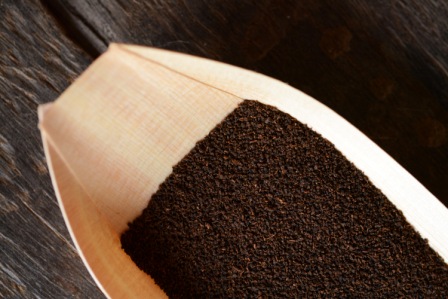
As well, I was given some incredibly good quality black loose leaf tea by a friend.  It was grown on his parents’ tea estate at a hill station in a beautiful part of south India. This friend grew up surrounded by rolling hills of a lush green carpet as far as the eye can see, at the top of a mountain with no mobile phone reception and little in the way of entertainment.  He tells tales of encountering wild animals in the front garden.  A tiger lurking among the bushes.  A leopard slinking along the rows of tea.

The wild bison he says, with mild annoyance, eat the roses that his mother painstakingly cultivates.

And we listen in awe, myself a city baby to the core (Mumbai, Sydney, London).  To me these stories are almost from another world, one where fresh mountain air is abundant, Wi-Fi is but a pipe dream and wildlife roams unhindered in the garden.

Chai

For weeks I have wanted to create something beautiful using that fragrant loose leaf black tea.  Something other than, well, tea.  When I stumbled across the Sweet Adventures Blog Hop event with its current theme of Sweet Surprise, I knew I had to come up with something that incorporated the tea and pushed my boundaries in the kitchen.

Chai Pud 4

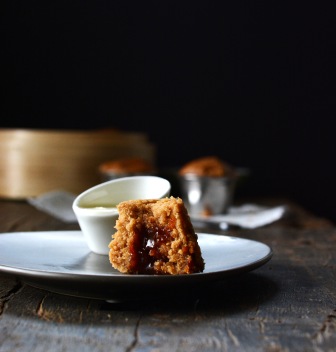
It is no secret that I adore using chai spices in sweets (like here and here).  So it was that the idea of chai puddings came into being.  And since I have always been a little intrigued by the idea of steaming, instead of baking, puddings I decided give it a go.  This is a steamed English pudding recipe, delicately infused with the flavour of good tea and spiced up with ginger, cinnamon and cardamom.  I used a bamboo steamer for these but you could easily fashion one using a colander and a pot lid.  I decided to make mini puddings, which I feel are the perfect serve of soft, warm, fragrant sponge.  And the surprise? Well, you might just have to keep reading…………

Chai Pud 5

Steamed Chai Puddings with a Caramel Surprise

Makes 4 or 5 mini puddings

Caramel Recipe from Smitten Kitchen

Pudding recipe modified from Notebook Magazine, August 2009, via www.taste.com.au

Get:

Caramel:

1/4 cup sugar
2 tbsp unsalted butter in small pieces
1 1/2 tbsp heavy cream

 Pudding:

1/2 cup milk
6 cardamom pods
1/2 vanilla bean split with seeds scraped out
3 tsp good quality powdered loose leaf black tea
1/2 tsp ground cinnamon
4cm ginger, grated
70g butter at room temperature
1/4 cup caster sugar
1 egg
3/4 cup Self-Raising flour
1 tbsp rice malt syrup or golden syrup

Make:

For the Caramel:

In a small non-stick saucepan on low-moderate heat, melt the sugar.  Remember when melting sugar, you want to just agitate the saucepan rather than stirring the melting sugar as that will cause it to crystallise.

Take the saucepan off the heat and add the butter- stir until the butter melts and it is somewhat incorporated (it will not blend completely).  Then, add the cream and return to the heat.  Boil on low-moderate heat until it becomes a dark golden colour and reaches the soft-ball stage. To test this, drop a pit of the caramel into a cup of cold water.  If a soft ball forms that you can actually pick up, it is ready.

Pour the caramel onto a plate lined with grease-proof paper and place in the freezer for 20-30 mins. When set, form the caramel into little balls about the size of a large olive.

For the Puddings:

Grease the mini ramekins well.  Line them with grease-roof paper.  Boil about 1 1/2 L of water in a large saucepan or in the kettle.

In a medium saucepan, place the milk, tea, vanilla (seeds and shell), half of the ginger, 5 of the cardamom pods, crushed (seeds and pods) and the cinnamon.  Bring to the boil and simmer on low heat for about 10 mins.  Take off the heat and place in the fridge to cool and infuse.  Once cooled, strain into another cup.  You will be using 1/3 cup + 1 tbsp of this milky tea.

In a large mixing bowl, cream the butter and sugar using an electric beater or a whisk and a powerful arm.  Add the egg and beat until incorporated. Powder the seeds of the remaining cardamom pod and add this along with the other half of the grated ginger.  Add the milky tea (1/3 cup + 1 tbsp) and the flour in alternating batches, stirring in between.  Stir until all the ingredients are well incorporated.  You can use the electric beater for this.

Fill the ramekins with the mixture to about 1/2 cm from the top.  Place in the steamer and place the steamer on top of a large saucepan half filled with boiling water.  Try and ensure it is a fairly tight fit.  Put the lid on the steamer and cook on moderate heat.  After about 20 mins, remove the lid and push on one of the puddings with your finger- if it is cooked with a spongy consistency, push a caramel ball into the centre of each pudding so that is about 1/2 cm below the edge of the ramekin.  Cook a little longer before inserting the caramel if it is undercooked. The pudding would have risen well above the rims of the ramekins.  Put the steamer lid back on and steam for a further 5-8 mins.

Allow the puddings to cool slightly, then run a knife along the top of the ramekin to remove the overhang.  Eat the overhang immediately before anyone else gets wind of it.

Run the knife around the edge of the pudding to loosen.  Tip the puddings onto a plate or serve in the ramekin with some cream or vanilla ice cream.

Notes:

I used these little stainless steel cups I had that are 6 cm in diameter and 4 cm high.  Mini ramekins would also work well.  Or double the pudding recipe (the caramel amount should be adequate) and use normal sized ramekins, with larger caramel balls.

If using small cardamom pods, use two in the pudding mixture instead of one.Chai Pud 2